Baking the CCDs
This section describes how to bake the HiPERCAM CCDs, which is sometimes necessary to remove the contamination present in CCD4 (and sometimes also in CCD3). The contamination is visible in flat fields in the form of small black spots of (paradoxically) enhanced sensitivity. The contamination is most probably due to an unknown material present in the CCD head that outgasses and then condenses onto the CCD when it is raised to room temperature without pumping. This usually occurs when there is an unexpected GTC chiller failure, e.g. due to a mains power cut.
For instructions on how to operate the HiPERCAM vacuum pump and Meerstetter peltier controllers, please refer to the pumping and cooling section of this user manual. Click on the photos below for larger images.
Identify which CCD you wish to bake by carefully inspecting the latest twilight or dome flat field frames. In particular, look for small, round black spots of enhanced sensitivity when plotting the frames using
nrtplotorhplot. These are usually strongest in CCD4, as shown in the image below, but sometimes also present in CCD3.
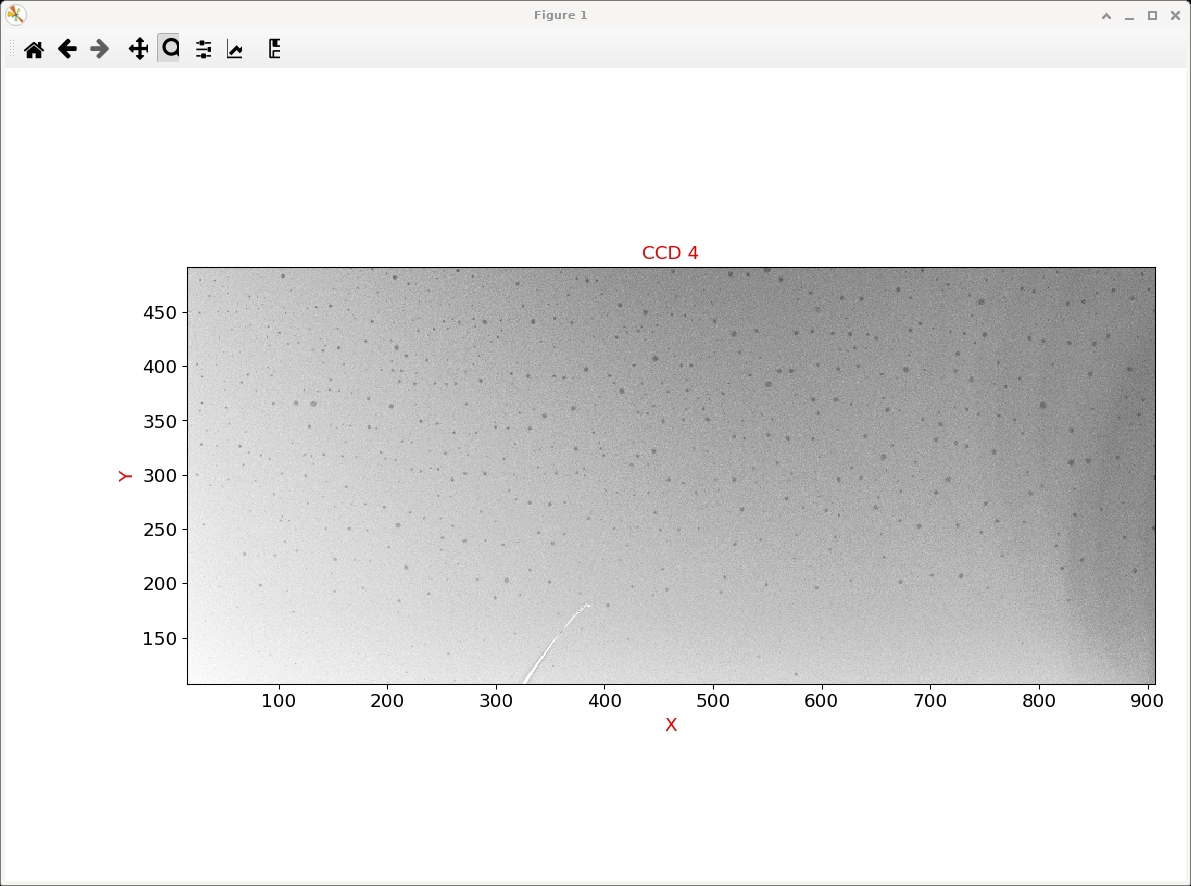
With the CCD still cold, turn on the vacuum pump and wait for the turbo to come up to speed. Then open the manifold valve, and allow the pump pressure to drop well below 1e-5 mbar, which should take a few minutes. Once it has, slowly open the valve of the contaminated CCD head, carefully checking that the CCD head pressure drops (if it doesn't, close the valve immediately and check you have done everything correctly).
With the vacuum pump still running, use the Meerstetter peltier controller to raise the temperature of the contaminated CCD from -90 degC (or whatever) to the bake temperature of +35 degC. It will take about 20 minutes for the temperature to slowly ramp up to the set temperature. For safety, please do not leave the instrument unattended during this phase. For example, the pump could fail if there is a mains cut, or you may have erroneously set a higher set point than +35 degC, both of which could destroy the CCD.
Never be tempted to bake two CCDs simultaneously, as it is possible for cross-contamination to occur.
Once at +35 degC, bake the CCD for a minimum of 1 hour, and preferably for a few hours, with the vacuum pump still running.
When the bake is complete, cool the CCD back down to -90 degC (or whatever) using the Meerstetter peltier controller, with the vacuum pump still running. This will take about 20 minutes.
When the CCD is at the set temperature and the pressure is around 1e-5 mbar (or as close as possible to this value), close the CCD head valve, then close the manifold valve, and then turn the vacuum pump off, in that order.
At the next available opportunity, take twilight or dome flats to verify that the contamination has been reduced/eliminated. An example post-bake image of CCD4 is shown below.
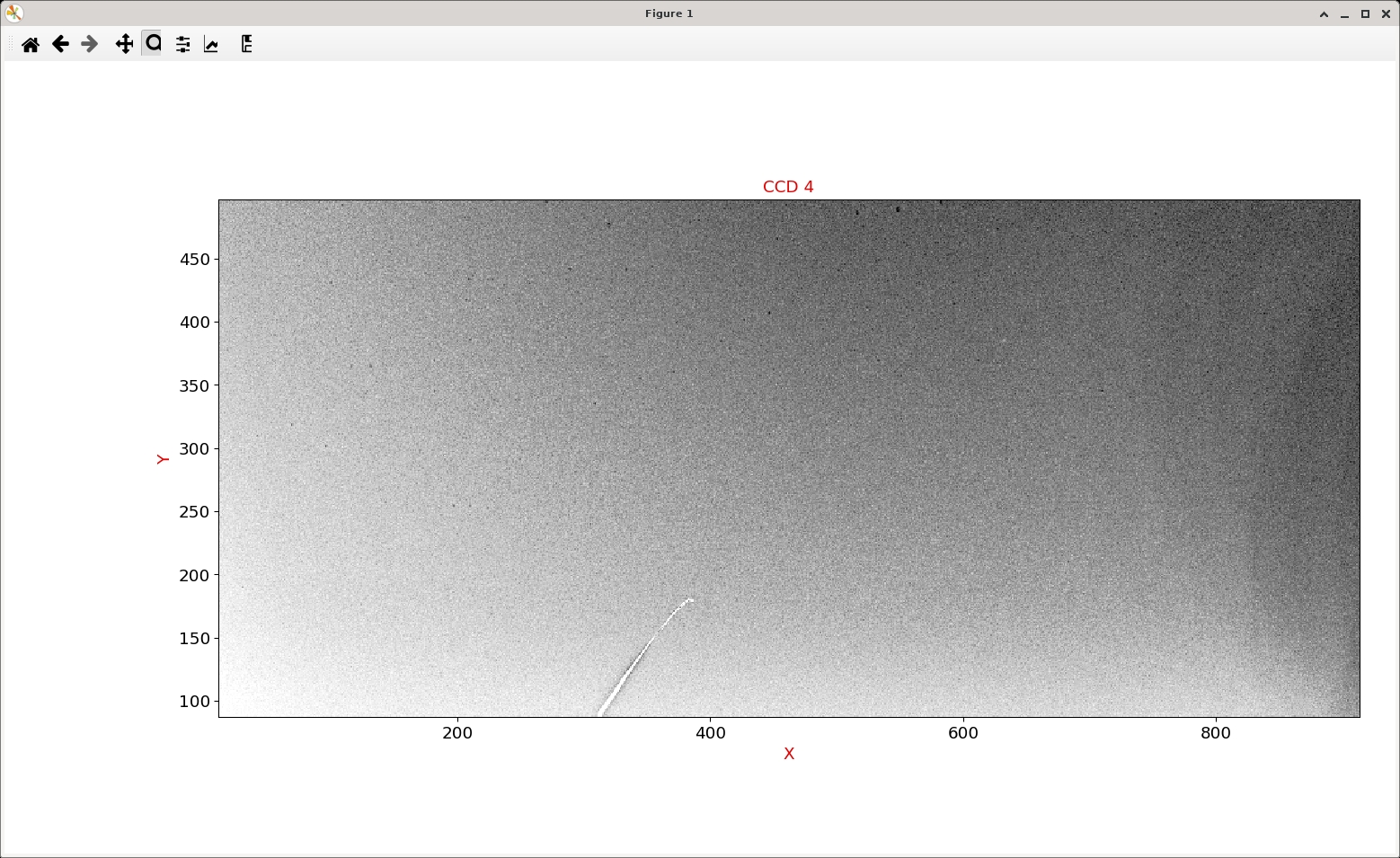
If the contamination is still present, it may be necessary to repeat the process, but please first check with the HiPERCAM team, as it is not healthy to be temperature cycling the CCDs unnecessarily, and it is almost impossible to remove the contamination entirely.
